How Container Ships Power Global Trade
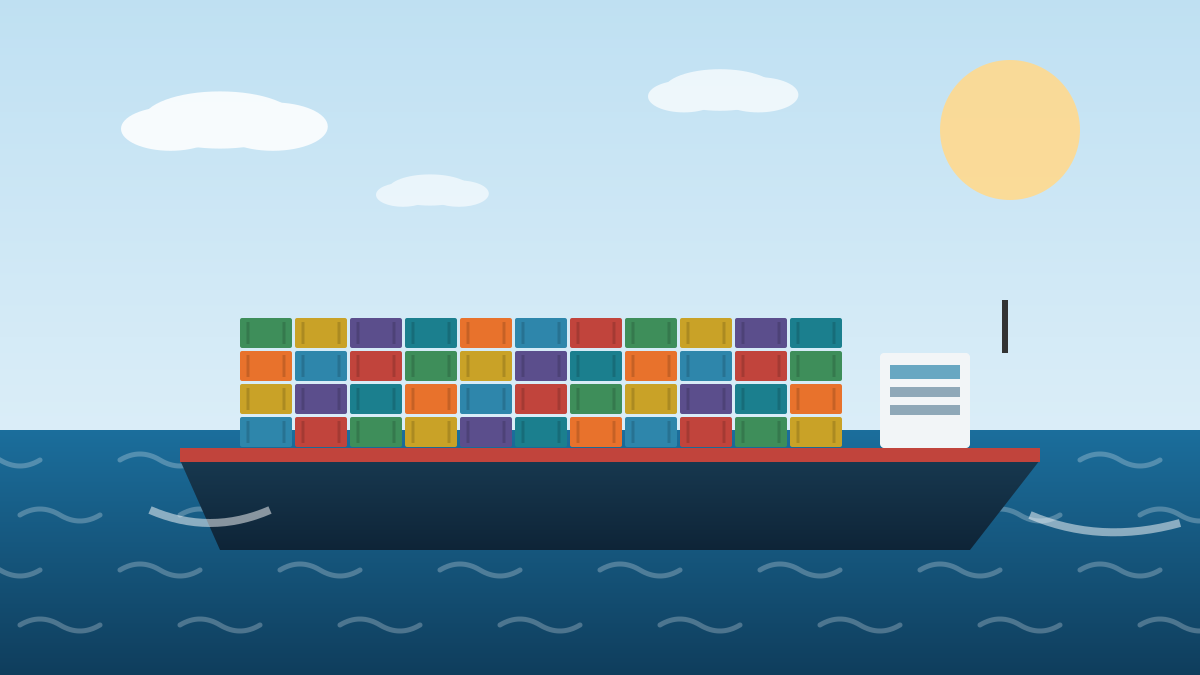
Look around the room you are in right now. Your phone, your clothes, your furniture, even the coffee in your cup — the odds are very high that most of these items traveled across an ocean before reaching you. And the vehicle that carried them was almost certainly a container ship.
The Invention That Changed Everything
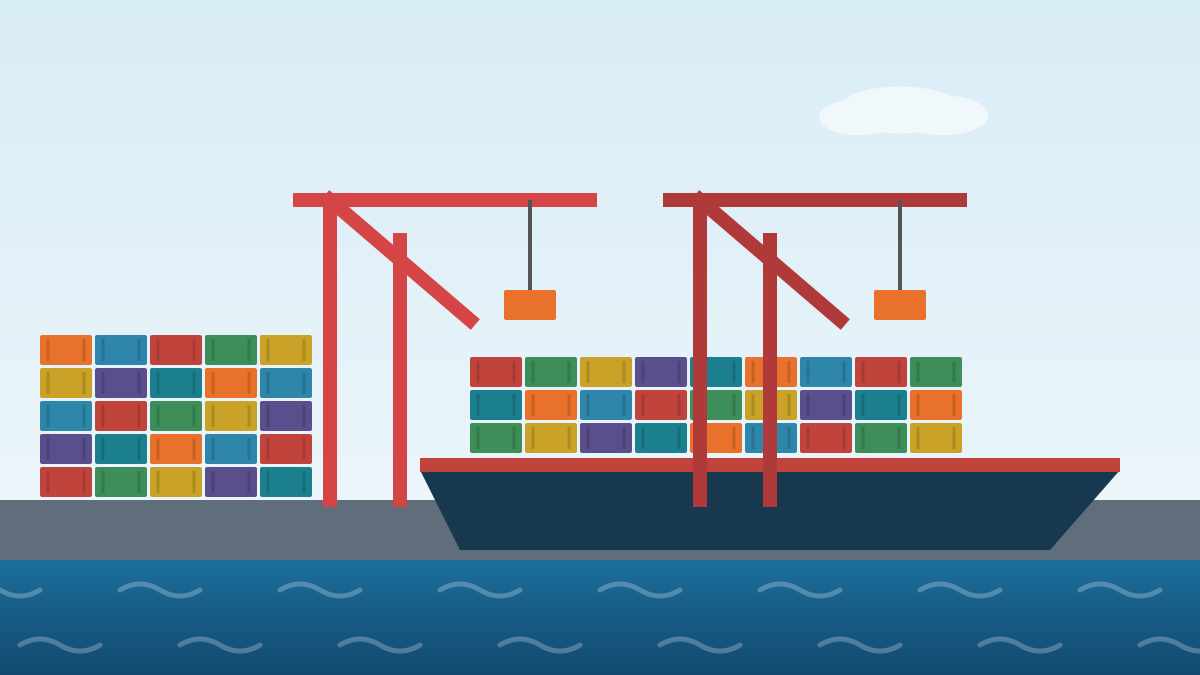
Before the 1950s, loading a cargo ship was slow, expensive, and dangerous. Dock workers moved goods by hand — barrels, sacks, crates — one item at a time. A ship could spend more time in port than at sea.
That changed in 1956, when American entrepreneur Malcom McLean introduced the standardized shipping container. Suddenly, goods could be packed once at a factory, sealed in a steel box, and moved by truck, train, and ship without ever being repacked. Loading times fell from days to hours. Shipping costs collapsed.
This single innovation is considered one of the most important drivers of modern globalization. It made it economically viable to manufacture products on one continent and sell them on another.
How Big Are Modern Container Ships?
Today's largest container ships are engineering marvels:
- They can stretch over 400 meters — longer than four football fields placed end to end.
- The biggest vessels carry more than 24,000 TEUs (twenty-foot equivalent units), the standard measure for containers.
- A single ship can transport enough goods to fill a medium-sized shopping mall many times over.
Despite their size, these ships operate with surprisingly small crews — often just 20 to 25 people — thanks to advanced automation and navigation systems.
Why Sea Transport Dominates
Roughly 80 to 90 percent of global trade by volume moves by sea. The reason is simple economics:
Cost efficiency. Shipping a container across the Pacific Ocean can cost less than trucking the same container across a large country. Per unit of cargo, no other transport mode comes close.
Scale. One large container ship carries what would require thousands of trucks or hundreds of cargo planes.
Energy efficiency. Measured per ton of cargo per kilometer, maritime transport produces far lower emissions than road or air freight, making it the most efficient option for heavy, long-distance trade.
The Journey of a Single Product
Consider a pair of sneakers designed in Europe, manufactured in Southeast Asia, and sold in South America. The rubber may come from one country, the textiles from another, and the assembly happens in a third. Container ships connect every step of this chain. Without them, this kind of distributed production — the foundation of the modern global economy — simply would not exist.
Challenges Facing the Industry
Container shipping is not without difficulties. Port congestion, fuel price volatility, and environmental regulations constantly reshape the industry. Events like canal blockages or pandemics have shown how sensitive global supply chains are to disruptions at sea. In response, the industry is investing in cleaner fuels, digital tracking systems, and smarter port logistics.
Conclusion
Container ships are the silent giants of globalization. They rarely make headlines, yet they touch nearly every product we buy. Understanding how they work is understanding how the modern world economy actually functions — one steel box at a time.
Frequently Asked Questions
How much of world trade travels by container ship?
Measured by value, a very large share of manufactured goods moves in containers, while by volume most global trade travels by sea overall. Containers dominate trade in consumer and industrial products, whereas raw materials like oil, ore and grain travel in specialized tankers and bulk carriers.
How long does a container ship take to cross an ocean?
Typical transit times are measured in weeks, not days: crossing the Pacific between Asia and the Americas commonly takes around two to three weeks depending on the ports involved, while Asia to Europe voyages take longer. Schedules also depend on the number of port calls along the route.
Do container ships carry passengers?
Generally no. A small number of shipping lines have historically offered a few passenger berths on freighters, but container ships are working vessels, and modern security and insurance rules make passenger carriage rare.
What happens to empty containers?
Because trade is unbalanced, millions of containers must be repositioned empty each year from import-heavy regions back to export-heavy ones. Managing this flow is one of the industry's biggest logistical and financial challenges.
Sources & Further Reading
- UNCTAD — Review of Maritime Transport: unctad.org
- International Maritime Organization (IMO): imo.org
- World Shipping Council: worldshipping.org