Refrigerated Containers: How the Cold Chain Crosses Oceans
Bananas ripening at exactly the right week. Salmon crossing the planet still fresh. Vaccines arriving potent after a month of travel. None of this would exist without one specialized piece of equipment: the refrigerated container, known in the industry as the reefer.
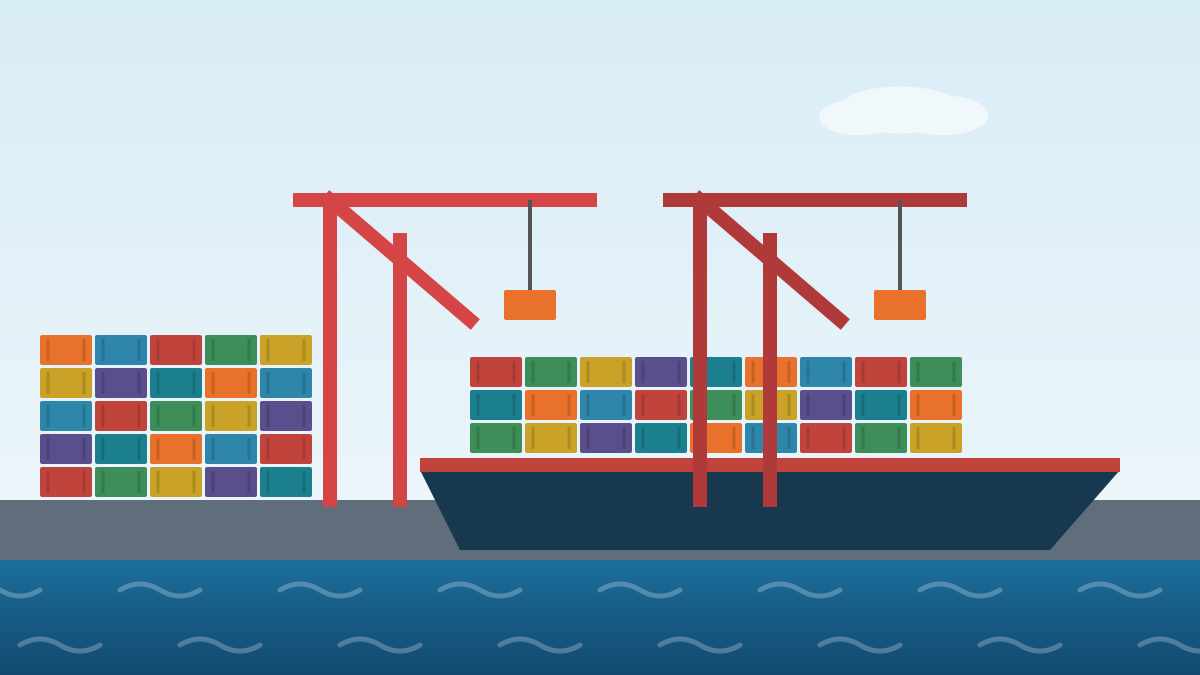
A freezer that travels the world
A reefer looks like a normal container with a machine at one end. That machine is a complete refrigeration unit able to hold any set temperature from about -30°C to +30°C for weeks, powered by the ship's electrical system at sea, and by generators or terminal power points on land. The insulated box maintains not just temperature but, in advanced units, humidity and even the atmosphere inside — slowing the ripening of fruit by controlling oxygen levels.
What travels cold
The cold chain carries far more than frozen food. Chilled beef and pork, fish and seafood, bananas and citrus, avocados, berries, dairy, chocolate, flowers cut days earlier, and pharmaceuticals — each with its own precise recipe of temperature and ventilation. A cargo of roses wants different conditions than a cargo of frozen shrimp, and mixing them up ruins either.
Precision is the whole business
The margin for error is tiny. A few degrees too warm for a few hours can ripen a banana cargo early or spoil seafood entirely; too cold can freeze and destroy fruit. That is why modern reefers carry sensors logging conditions continuously, many transmitting readings by satellite or cellular link so that operators see problems in real time. Terminals dedicate powered racks to reefers and monitor them around the clock — a silent alarm at 3 a.m. sends a technician running.
Why the cold chain changed world food
Before reliable refrigerated transport, perishable trade was regional and seasonal. The reefer made food global: southern-hemisphere harvests supply northern winters, coastal catches reach inland continents, and consumers expect strawberries in December without thinking about it. For exporting nations, the cold chain turned agriculture into a major maritime industry — entire trades exist because a box can hold 4°C for three weeks.
The energy question
Cold costs power. Reefers are among the most energy-hungry cargo a ship carries, and the industry is responding with better insulation, smarter compressors that cycle efficiently, and terminal electrification so containers plug into grid power instead of diesel generators. The greenest reefer is the one that never breaks its chain — spoiled cargo wastes every unit of energy spent moving it.
Conclusion
The cold chain is a promise kept across oceans: that time and distance will not touch what is inside the box. Every fresh import in your supermarket is that promise, delivered.
Sources & Further Reading
- UNCTAD — Review of Maritime Transport: unctad.org
- International Maritime Organization (IMO): imo.org
- World Shipping Council: worldshipping.org