The Science of Stowage: How a Container Ship Is Loaded
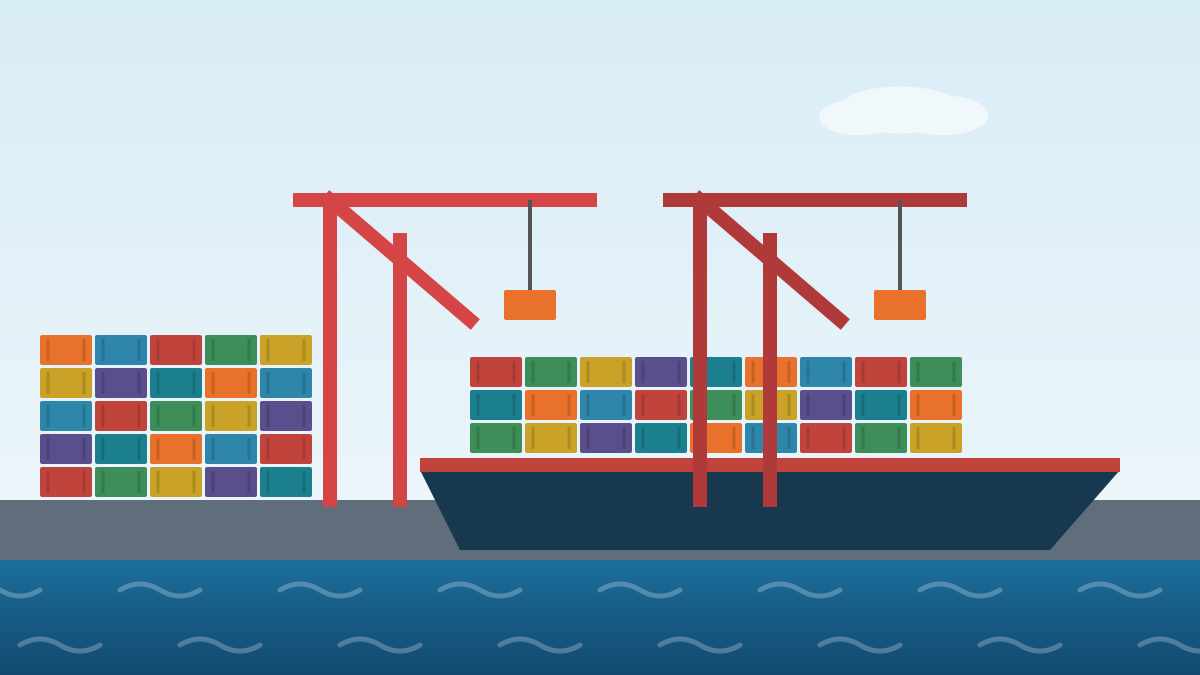
Watching cranes load a container ship, the process looks almost casual — box after box, hour after hour. In reality every single container is landing on a spot chosen in advance by one of the most constrained puzzles in logistics: the stowage plan.
The coordinates of a floating warehouse
Every slot on a container ship has an address — bay, row, and tier — locating it lengthwise, across the beam, and by height. A stowage plan assigns thousands of specific containers to thousands of specific addresses, and the choices interact: change one box and you may have to change fifty.
Constraint one: the ship must stay upright
Weight distribution rules everything. Heavy boxes belong low and centered; stack too much weight high and the vessel becomes tender and dangerous, too low and she rolls harshly, stressing cargo and crew. Weight must balance fore-and-aft (trim) and side-to-side (heel), within hull strength limits — a miscalculated distribution can literally bend a ship. Planners work with certified container weights and ballast water adjustments to land inside all limits at once.
Constraint two: the order of ports
A ship calling five ports must be loaded like a well-packed suitcase: cargo for the first stop accessible, cargo for the last stop buried deepest. Get it wrong and cranes waste hours on restows — digging out boxes just to reach others beneath. Minimizing these wasted moves across a whole rotation is a classic optimization problem, now attacked by algorithms that juggle thousands of variables in minutes.
Constraint three: special cargo
Reefers must sit where power sockets exist. Dangerous goods must respect segregation rules — certain classes apart from others, some restricted to deck stowage. Overweight, over-height, and open-top units need particular positions; empty boxes ride high where their light weight helps stability. Each special category shrinks the feasible puzzle further.
Who solves it
The work is shared. Shipping line planners draft the plan ashore with specialized software; terminal planners translate it into crane work sequences; and the ship's chief officer holds final authority, checking stability numbers and signing off before departure — because at sea, responsibility is not delegated to an algorithm.
Why it matters beyond the ship
Good stowage is invisible efficiency: faster port calls, fewer restows, safer stacks in storms, lower fuel burn from proper trim. Across a fleet and a year, stowage quality is worth millions — and it is one reason the same cargo can cost less to move on a well-run line.
Conclusion
Before a container ship sails, it has already been sailed on paper — every ton placed, every port rehearsed. The calm you see at the quay is the puzzle, already solved.
Sources & Further Reading
- UNCTAD — Review of Maritime Transport: unctad.org
- International Maritime Organization (IMO): imo.org
- World Shipping Council: worldshipping.org